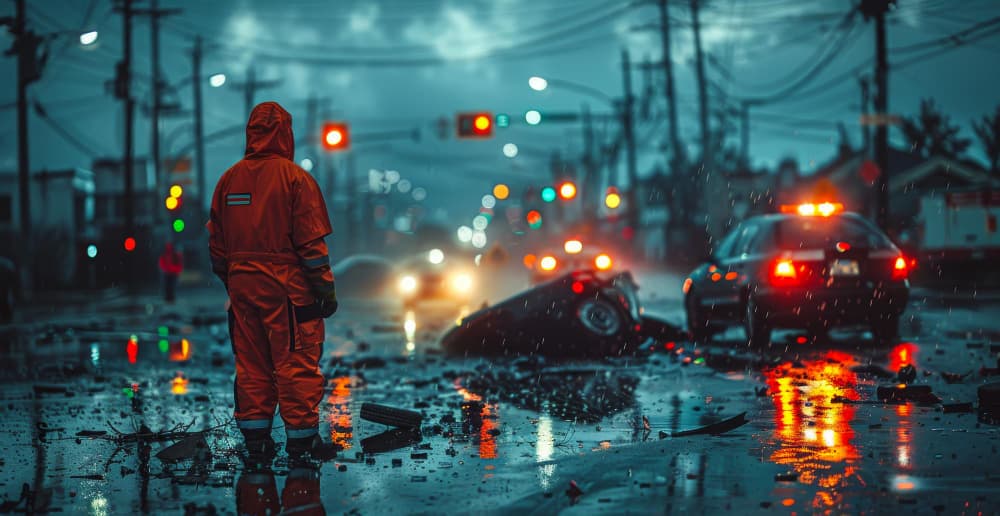

We are living through a moment of profound transition in disaster risk reduction. Climate risks are no longer distant or predictable—they are unfolding faster, interacting in complex ways, and affecting lives and livelihoods at unprecedented scales. In this changing landscape, Artificial Intelligence (AI) is not just another tool; it represents a shift in how we understand risk itself. The focus is moving beyond forecasting hazards to anticipating what those hazards will actually do—to communities, infrastructure, economies, and human wellbeing.
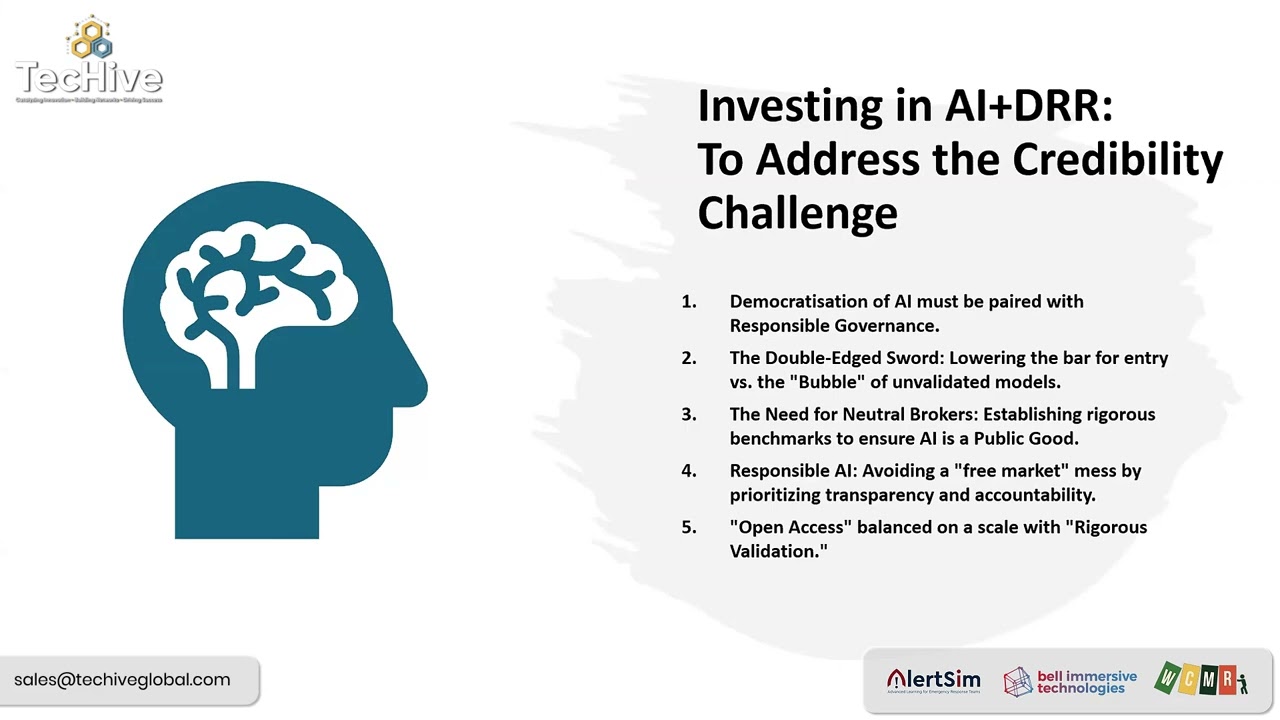
Yet, there is a gap between promise and practice. Much of the current work on AI in DRR remains at the pilot stage—innovative, but not yet embedded in systems that can operate at scale. This is not simply a technological issue. It reflects deeper challenges: fragmented data systems, limited institutional capacity, and models that are often designed for research rather than real-world decision-making. At the same time, the rapid spread of AI tools brings its own risks—without strong governance, we risk creating a landscape of unverified models and misplaced confidence. What is needed is responsible AI—grounded in transparency, validation, and public accountability.
A particularly important shift is underway from traditional geospatial approaches to GeoAI. Where earlier systems helped us understand what had happened, GeoAI helps us anticipate what is likely to happen next—and what actions are required. Emerging ideas such as "GeoAI Guardians" reflect this evolution: systems that not only generate insights but also ensure those insights are trustworthy, ethical, and actionable.
AI is also helping us see risk differently. Disasters are no longer isolated events; they are cascading failures across interconnected systems. A single disruption—such as a power outage—can ripple across water supply, healthcare, and communications. By mapping these interdependencies, AI enables a more holistic understanding of risk and resilience.
The economic case is equally strong. The true cost of disasters lies not just in physical damage but in the far larger indirect losses that follow. Investing in AI-enabled DRR is therefore not a cost—it is an opportunity to capture a resilience dividend, reducing long-term economic and social disruption.
Ultimately, the path forward lies in making AI inclusive, ethical, and accessible—through shared data systems, local ownership, and stronger global cooperation. The tools are already in place. What is needed now is the leadership to ensure that AI serves as a genuine engine of prevention and resilience in a rapidly changing world.
About the Author
Sanjay K Srivastava, PhD, Chair Professor, National Institute of Advanced Studies @ IISc Bengaluru; Adjunct Research Professor, UNU-Hub (R-SIRUS), The City College of New York; Former Chief of Disaster Risk Reduction, UN Economic and Social Commission for Asia and the Pacific, Bangkok