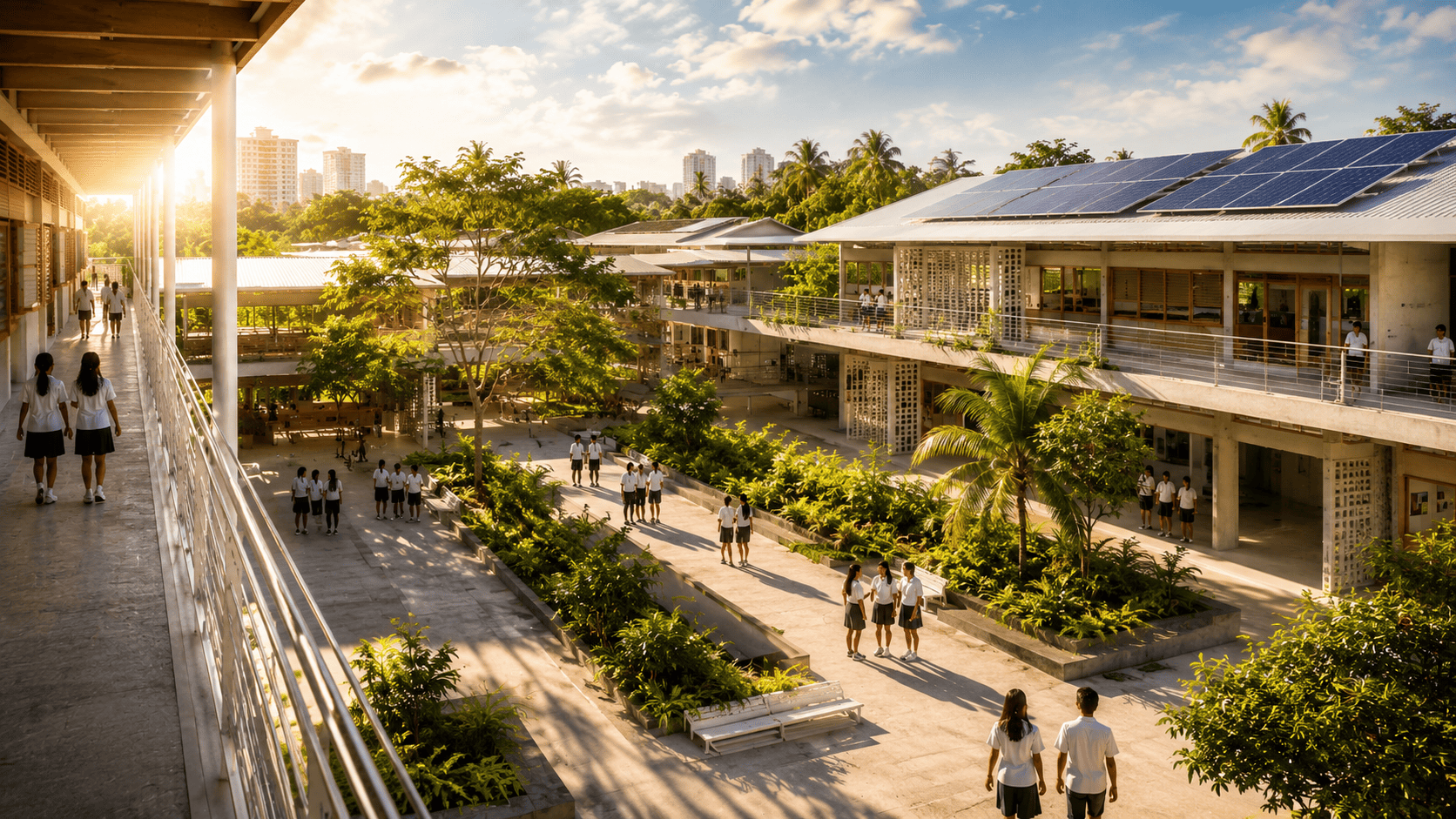

A key focus was understanding how heat is experienced within school environments. Identifying hotter classrooms, outdoor areas and circulation routes can help determine where interventions are most needed. Immediate measures include adjusting the timing of physical activities and assemblies, ensuring access to drinking water, and checking the condition and operation of blinds, curtains, fans and air-conditioning systems.
The discussion then moved towards physical measures that can progressively improve resilience, including external shading, covered walkways, reflective roof coatings, insulation, ceiling fans and vegetation. For new schools, heat resilience can be incorporated from the design stage through appropriate site orientation, preservation of existing trees, natural ventilation, shaded courtyards, reflective roofs, suitable glazing and solar canopies.
An important emphasis was placed on diagnosing, prioritising, piloting, standardising and measuring interventions. Measuring effectiveness should extend beyond temperature to include uncomfortable indoor hours, heat-related incidents, operational disruption, energy consumption, attendance and feedback from students and staff.
The presentation ultimately highlighted shade as core infrastructure, alongside resilience education for families. Tree canopies, shaded routes and covered play areas can reduce heat exposure, while greater awareness among students and parents can support safer behaviour during periods of extreme heat.
AI can complement these efforts by supporting preparedness and planning, helping schools move from recognising heat risk towards practical and measurable resilience.