

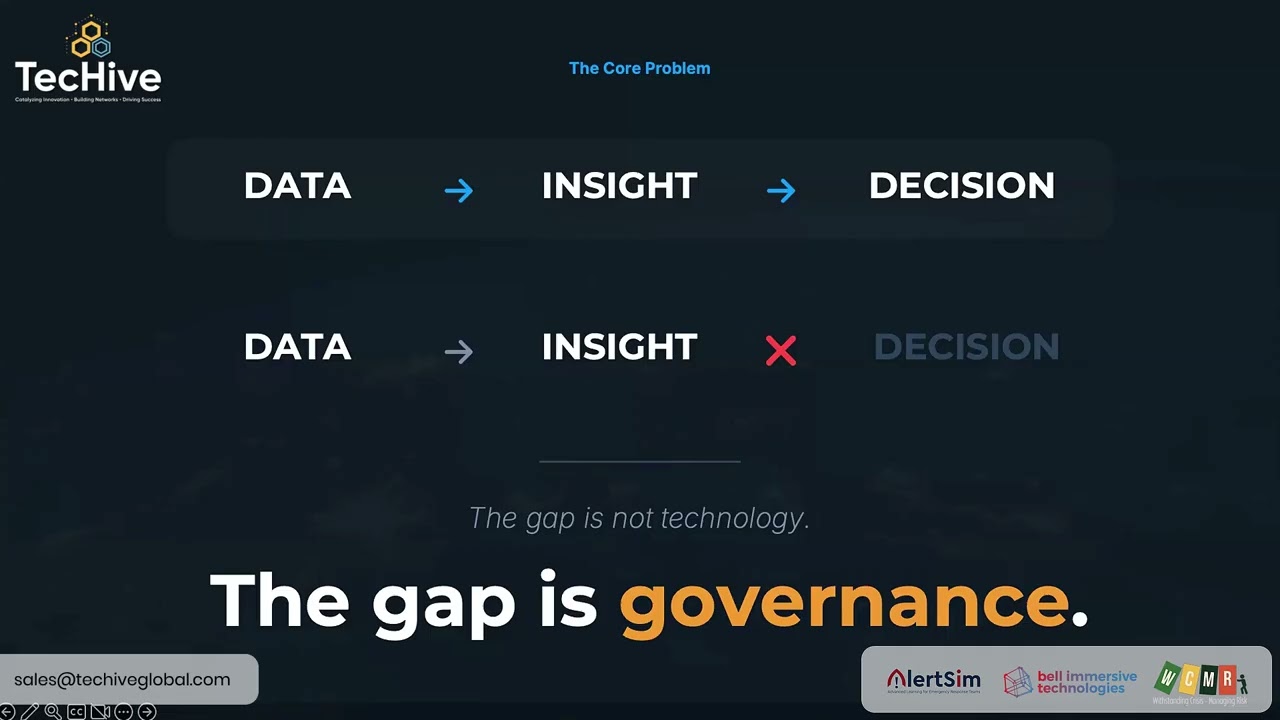
The central insight was that artificial intelligence is not merely enhancing disaster risk knowledge — it is fundamentally reshaping how risk is defined, interpreted, and operationalized. AI-driven probabilistic modeling, predictive analytics, and integrated climate-hazard datasets offer unprecedented capabilities to anticipate cascading risks across systems. However, the discussion emphasized that technical sophistication alone does not translate into resilience.
A key theme that emerged was the need to move from "data abundance" to "decision-grade intelligence." AI systems must support actionable policy decisions, not simply generate increasingly granular forecasts. This requires governance frameworks that ensure transparency of algorithms, mitigation of dataset bias, and clarity around how uncertainty is communicated to decision-makers and the public.
The panel also underscored the indispensable role of human judgment. AI can identify patterns and model scenarios at scale, but institutional trust depends on accountable leadership and contextual interpretation. Risk knowledge must integrate social vulnerability data alongside hazard projections to ensure that predictive systems do not reinforce inequities.
Across the broader conference, a shared outcome was recognition that resilience is as much a governance challenge as it is a technical one. Strengthening disaster risk reduction in Latin America, the Middle East, Asia, and beyond will require not only advanced AI tools, but also institutional capacity, cross-sector collaboration, and public trust.
The future of AI in DRR lies in pairing intelligence with accountability — ensuring that predictive power strengthens, rather than complicates, resilient systems.